
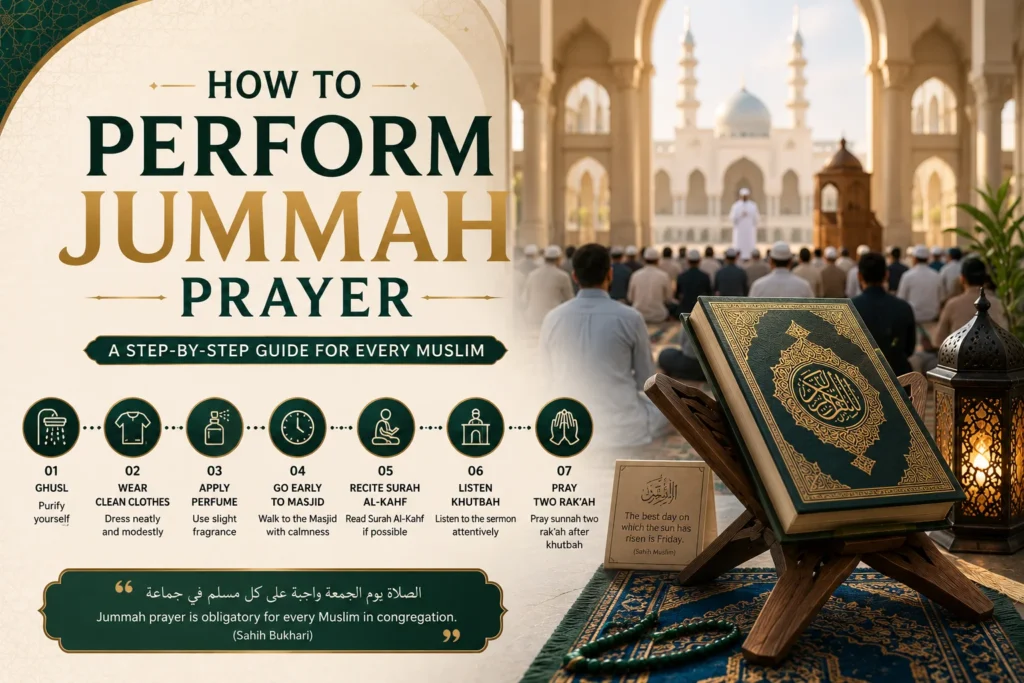
A Comprehensive Guide to Friday Prayer: How to Say the Jummah Prayer
Jummah prayer is a special Friday prayer that brings Muslims together for worship, remembrance, and a weekly reminder of their responsibilities before Allah. For many Muslims, Friday is a day to step away from the normal routine and reconnect with faith and the Muslim community.
If you are searching for how to perform the Jummah prayer, you may be wondering how many rakahs you need to pray and what happens during the khutbah. Whether Jummah replaces Zuhr, and what you should do if you arrive late.
The basic answer is simple: Jummah consists of a khutbah followed by two obligatory rakahs performed in congregation behind the imam. For a person upon whom Jummah is obligatory, a valid Jummah prayer replaces the obligatory Zuhr prayer on Friday.
What Is Jummah Prayer?
Jummah, also called Salat al-Jummah, is the congregational Friday prayer performed during the time associated with the Friday prayer. It is different from the regular daily Zuhr prayer because Jummah includes a khutbah before the congregational Salah. The imam delivers the sermon, the congregation listens, and then the imam leads everyone in two rakahs of prayer.
The Friday gathering has both a spiritual and community purpose. It gives Muslims an opportunity to hear reminders from the Quran and Sunnah, reflect on their lives, and worship Allah together. For Muslims in Pakistan, Friday prayer is often already part of the weekly schedule. Muslims in the United States may have to make additional arrangements because Friday usually falls during work or school hours.
Is Jummah Prayer Obligatory?
Jummah is generally obligatory for adult Muslim men who meet the conditions established in Islamic law. The ruling is not identical for every person. Women, travelers, people who are ill, and individuals with certain valid circumstances may have different rulings.
Because the detailed conditions can vary according to circumstances and schools of Islamic jurisprudence. Anyone with a particular situation should ask a qualified and trustworthy Islamic scholar. If Jummah is obligatory upon you and you have no valid excuse, you should make a sincere effort to attend the congregational prayer.
How to Perform Jummah Prayer Step by Step
Understanding Jummah becomes much easier when you break it into stages.
1. Prepare for Friday
Your Friday preparation starts before you arrive at the mosque. Islam places importance on cleanliness and good personal appearance, particularly when attending a congregational gathering.
You can prepare by:
- Taking care of your personal hygiene.
- Performing ghusl when appropriate.
- Wearing clean and suitable clothes.
- Using fragrance when appropriate.
- Making your intention to attend Jummah for the sake of Allah.
- Leaving home early enough to reach the mosque before the khutbah.
Try not to make your Friday preparation a rushed activity. Giving yourself enough time allows you to arrive with a calm mind and focus on worship.
2. Check Your Local Jummah Time
Jummah does not necessarily begin at the same clock time at every mosque. This is particularly important in the USA, where many Islamic centers arrange multiple Friday services to accommodate Muslims who work or attend school.
Mosques in Pakistan also have their own schedules, and the exact timing can differ between cities and individual mosques. Before Friday, check the official schedule of your local mosque or Islamic center. If you are working or studying, plan your transportation and break time in advance.
3. Arrive Before the Khutbah
Try to reach the mosque before the khutbah begins. Arriving early gives you time to enter peacefully, find a place, and prepare yourself for the sermon. Once you are inside, avoid unnecessary conversation or distractions. Put your phone on silent and give your attention to the worship taking place. The khutbah is more than just a pre-prayer sermon. It plays a significant role in the Friday get-together.
4. Listen Carefully to the Khutbah
The imam normally delivers the Friday khutbah in two portions, with a brief sitting between them. The sermon may include Quranic verses, Prophetic teachings, reminders about Allah, advice about personal character, family responsibilities, community life, and other matters relevant to Muslims.
Your role as a worshipper is to listen attentively. Avoid unnecessary talking, using your phone, or distracting people around you. Even when the topic is familiar, listen with an open heart. A reminder that you have heard many times can still be meaningful when you apply it to your current circumstances.
5. Prepare for the Two Rakahs
The imam leads the assembly in the required Jummah prayer following the khutbah. There are two rakahs in the required Jummah prayer. This is one of the main differences between Jummah and the normal obligatory Zuhr prayer, which consists of four obligatory rakahs. When the imam begins the prayer, follow him carefully. Do not rush ahead of him or perform the movements before he does them.
6. Perform the First Rakah
The first rakah follows the familiar structure of Salah. The imam begins the prayer, and the congregation follows. The prayer includes standing, Quranic recitation, ruku, standing after ruku, sujood, sitting between the two prostrations, and the second sujood. The congregation follows the imam throughout these movements. The exact recitation heard during the prayer may differ from one Friday to another because the imam may choose different passages from the Quran.
7. Perform the Second Rakah
The imam stands for the second rakah after finishing the first. Once more, follow the imam as they lead the prayer. The assembly sits for the last part of Salah following the recitation and the necessary motions. Salam concludes the prayer. The two required rakahs of Jummah are finished once the imam has finished the salam.
How Many Rakahs Are in Jummah Prayer?
There are two rakahs in the required Jummah prayer. However, you may see people praying additional Salah before or after the obligatory Jummah prayer. These additional prayers should not be confused with the two obligatory rakahs themselves.
There are differences among scholars concerning certain details of Sunnah prayers connected with Friday, including their number and timing. This is why Muslims following different schools of Islamic jurisprudence may observe slightly different practices at their local mosques. If you are unsure about a particular Sunnah prayer, follow the reliable guidance of your imam, scholar, or established madhhab.
Does Jummah Replace Zuhr Prayer?
Yes. When a person performs a valid Jummah prayer, it takes the place of the obligatory Zuhr prayer for Friday. Therefore, a person who has validly performed Jummah does not normally pray the four obligatory rakahs of Zuhr afterward. Additional Sunnah or voluntary prayers are a separate matter. A simple way to remember the distinction is:
Valid Jummah on Friday = the obligatory Zuhr prayer is replaced by Jummah.
What Should You Do Before Jummah?
Friday is associated with several recommended acts of worship and personal preparation. Muslims commonly use Friday to increase their remembrance of Allah and engage more deeply with worship. Depending on your practice, you may:
- Perform ghusl.
- Wear clean clothes.
- Maintain good personal hygiene.
- Use fragrance when appropriate.
- Reach the mosque early.
- Send blessings upon Prophet Muhammad ﷺ.
- Make dua.
- Read or listen to the Quran.
- Pay attention to the khutbah.
These practices can help make Friday more than simply another day on the calendar.
What If You Arrive Late for Jummah?
Arriving late is a situation many Muslims experience, especially when work, school, traffic, or transportation creates unexpected delays. If you arrive while the congregational prayer is still taking place, join the imam immediately and follow the prayer.
The exact ruling about how to complete the prayer depends on when you joined and how much of the congregational prayer you caught. If you completely miss Jummah, you should not simply pray two rakahs alone and consider them Jummah. The general alternative is to perform Zuhr prayer.
Because the detailed ruling concerning a late arrival can depend on the circumstances, asking a qualified local imam is the safest approach if you are unsure.
Can Women Perform Jummah Prayer?
Women may attend the mosque and participate in Jummah prayer with the congregation. However, Jummah is not generally obligatory for women in the same manner that it is obligatory for adult Muslim men who meet its conditions.
A woman who attends and performs a valid Jummah prayer does not need to perform the regular obligatory Zuhr prayer for that Friday. A woman who does not attend Jummah can pray to Zuhr instead. Mosque facilities and arrangements for women differ between communities, so checking with the local Islamic center before Friday can be useful.
Can You Perform Jummah at Home?
Jummah is a congregational prayer with specific requirements. It is not simply a matter of praying two rakahs alone at home. If someone has a valid reason that prevents them from attending Jummah, the general alternative is to pray Zuhr.
Questions about whether a particular home or private gathering fulfills the conditions for Jummah can involve detailed differences in Islamic jurisprudence. For such situations, it is better to consult a knowledgeable scholar rather than relying on a general internet article.
Jummah Prayer for Muslims in the USA
For Muslims living in the United States, attending Jummah can require practical planning. Friday is normally a regular work and school day, so many Muslims need to arrange a lunch break or another suitable period for prayer. Many mosques and Islamic centers offer multiple Jummah services. The available times depend on the local community.
Before Friday, check:
- Your mosque’s official Jummah schedule.
- Whether more than one service is available.
- How long the khutbah and prayer usually take.
- Transportation and parking.
- Your work or school schedule.
Planning ahead can help you attend Jummah without creating unnecessary stress.
Jummah Prayer in Pakistan
Jummah is widely observed throughout Pakistan, with mosques in cities, towns, and villages holding Friday congregational prayers. Many people organize their Friday activities around the prayer, and some workplaces and educational institutions make arrangements that allow Muslims to attend.
Still, Jummah timing is not identical across Pakistan. The khutbah and prayer schedule depends on the individual mosque and local circumstances. For the most accurate information, check the Friday schedule announced by your nearby mosque.
Common Mistakes to Avoid During Jummah
If you are learning Jummah for the first time, you do not need to feel nervous. If you already know the basic Salah, much of the physical prayer will be familiar.
A few common mistakes are worth avoiding:
- Arriving after the khutbah: Try to reach the mosque before the sermon begins.
- Talking during the khutbah: Give the sermon your attention and avoid unnecessary conversation.
- Using your phone: Silence your phone before the khutbah and avoid checking messages.
- Disturbing other worshippers: Keep your movements and conversations to a minimum.
- Confusing Jummah with Zuhr: Remember that the obligatory Jummah prayer is two rakahs and replaces obligatory Zuhr when Jummah is validly performed.
- Moving ahead of the imam: Follow the imam’s movements during congregational Salah.
- Assuming every mosque has identical practices: Some differences in additional Sunnah prayers are based on recognized scholarly opinions.
FAQS
How many rakahs are in Jummah prayer?
The obligatory Jummah prayer consists of two rakahs performed in congregation after the khutbah.
Does Jummah replace Zuhr?
Yes. A valid Jummah prayer replaces the obligatory Zuhr prayer for Friday.
Is the khutbah before or after Jummah?
The khutbah takes place before the two obligatory rakahs of Jummah.
What time is Jummah prayer?
Jummah is performed during the Friday prayer period around the time of Zuhr. The exact time varies by mosque and location.
Can I pray to Jummah alone?
Jummah is a congregational prayer and is not simply performed individually as two rakahs. If you have a valid excuse preventing you from attending, the general alternative is Zuhr.